



L'Officiel
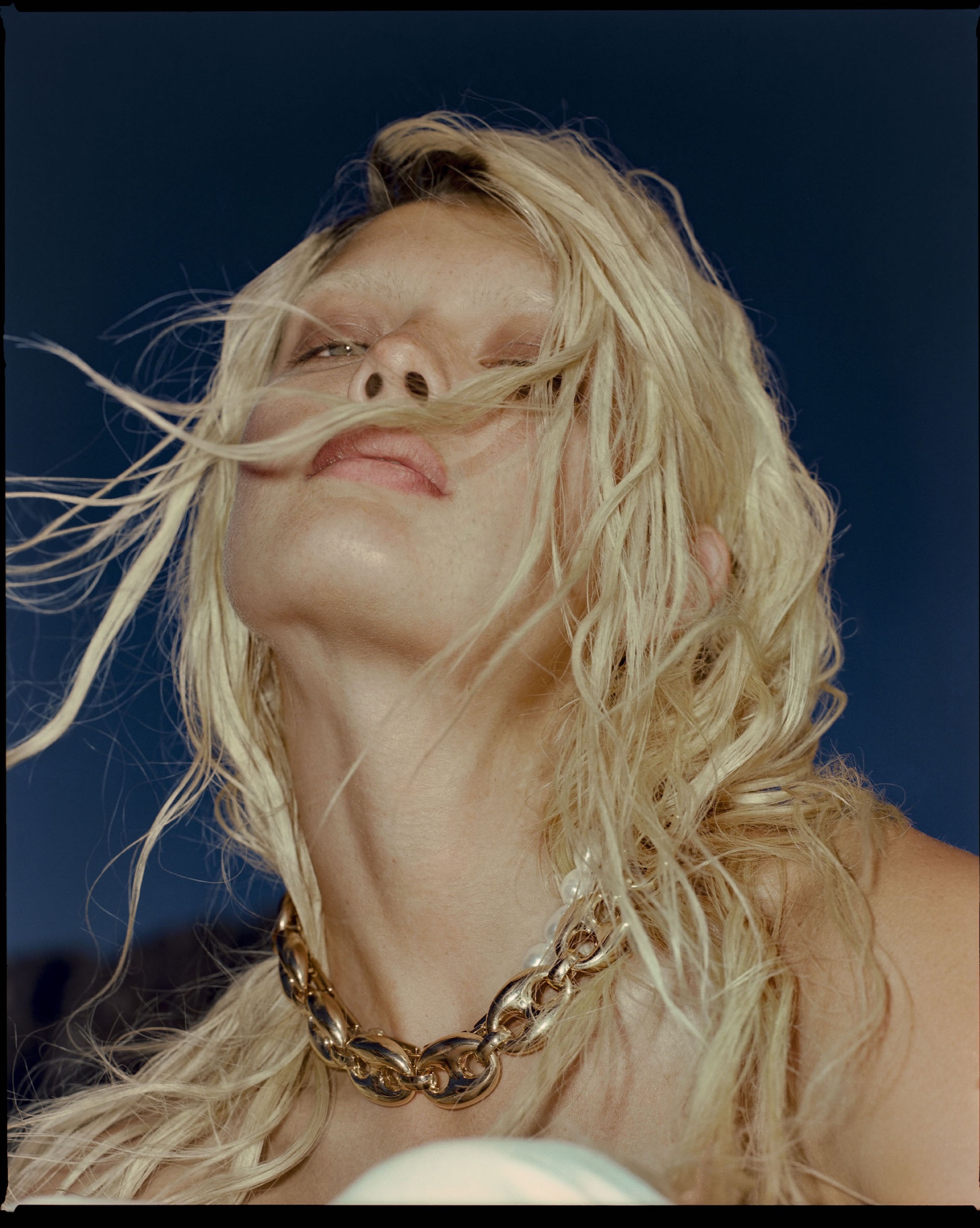
Built in 3D aboveOne bare flash on the camera, the sun behind.
- Feels
- Bright, spontaneous, paparazzi
- Lights
- 1, plus the sun
- Best for
- Street, location, crowds and movement
We lit our L'Officiel story in Milan with one bare flash on the camera and the midday sun.
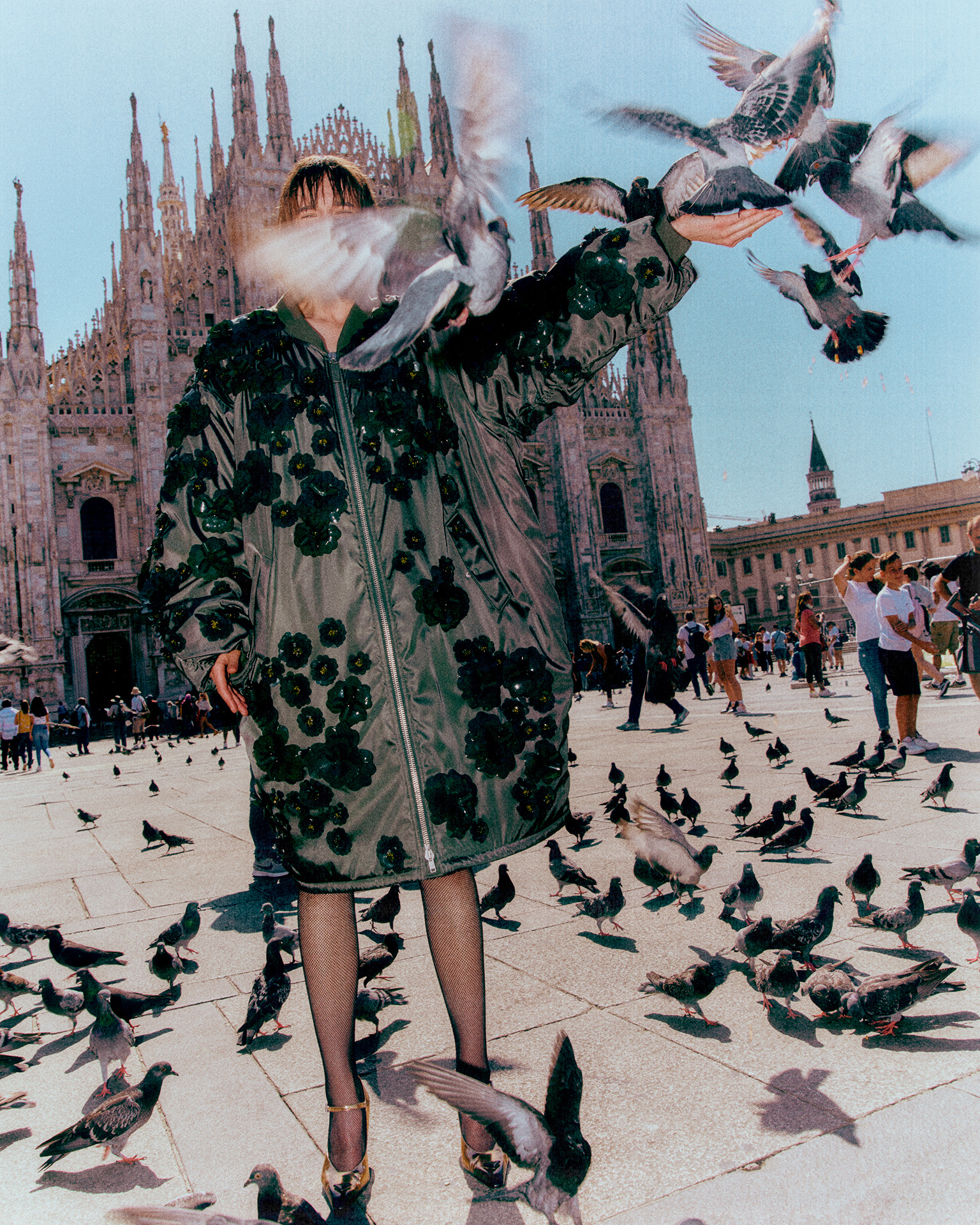
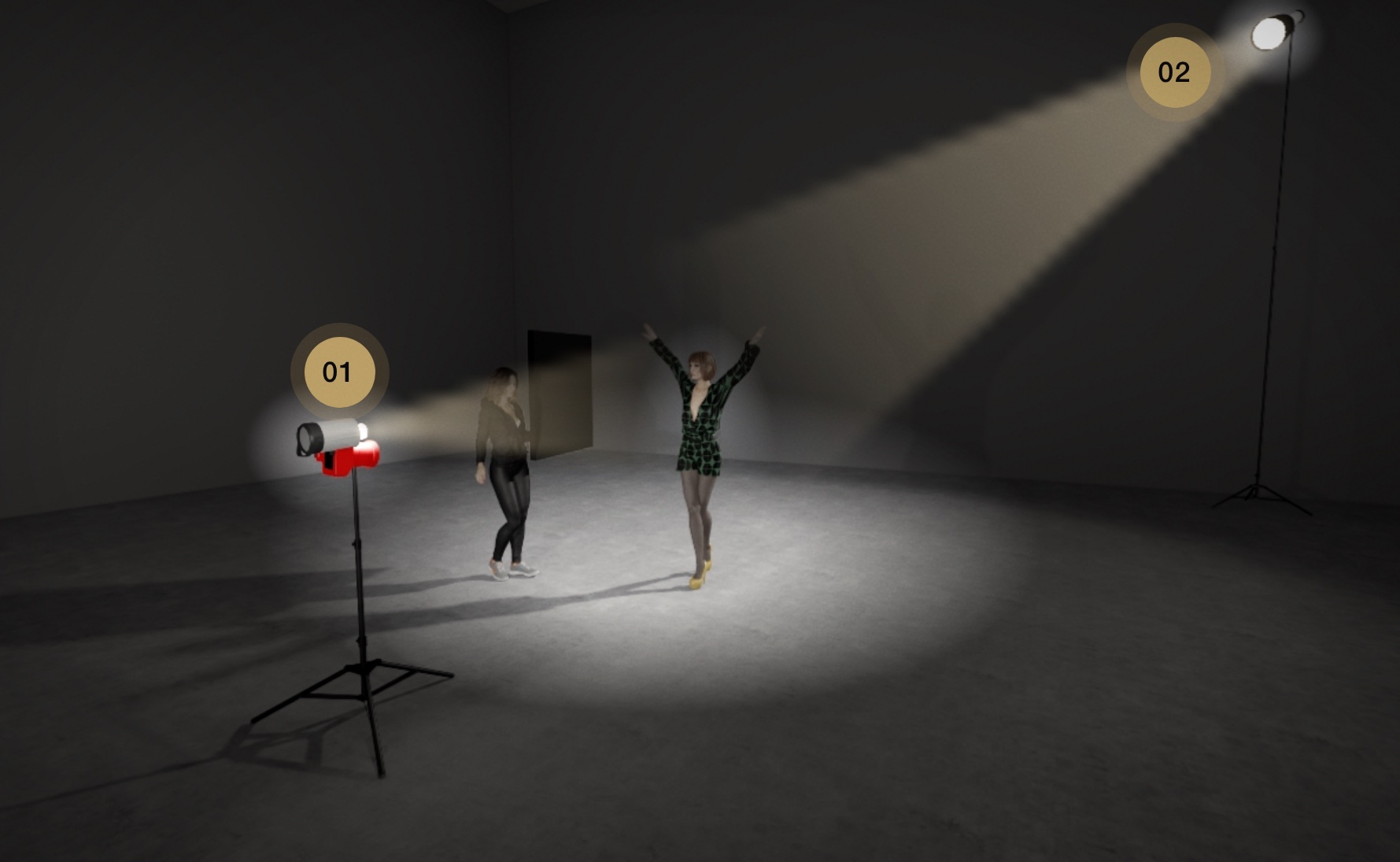
That was the feel for this L'Officiel story on the square in front of Milan Cathedral. The midday sun was already hard and bright. So instead of fighting it, we added one more hard light: a bare flash, straight from the camera.
Hard light comes from a small source: a flash with no modifier, a bare bulb, or the sun. It draws sharp shadows, makes colours pop and shows every texture of the fabric. Direct flash fills the front, while the sun lights the scene from behind. Face and clothes stay bright, and the sky keeps its colour. It is the look of a paparazzi picture, and it works because nothing about it feels staged.
The exact setup from the L'Officiel shoot, rebuilt in 3D. Pick a step to switch the lights on one by one.
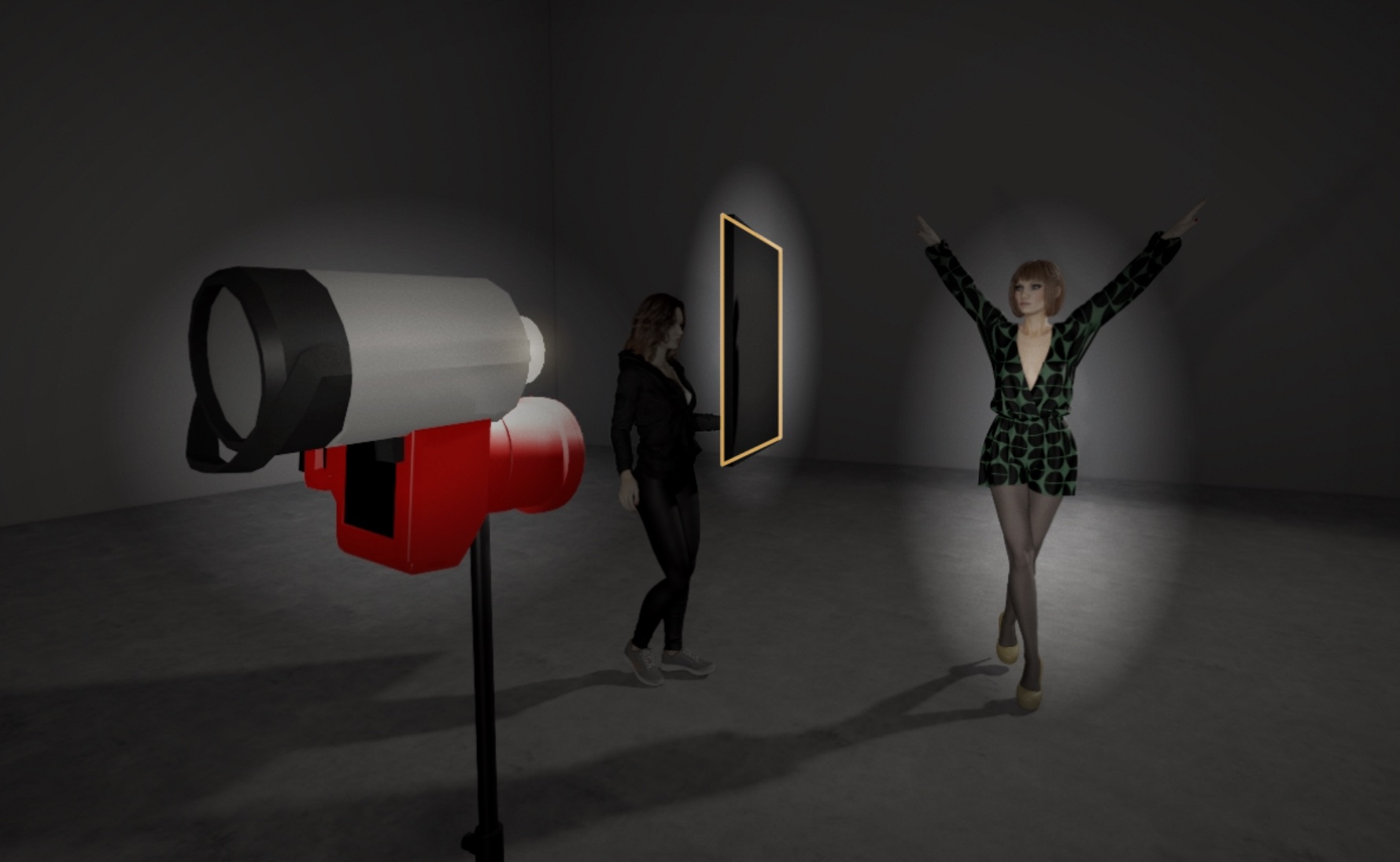
Each one uses a small, strong source, and the shadows get a hard edge.
One bare flash on the camera, the sun behind.
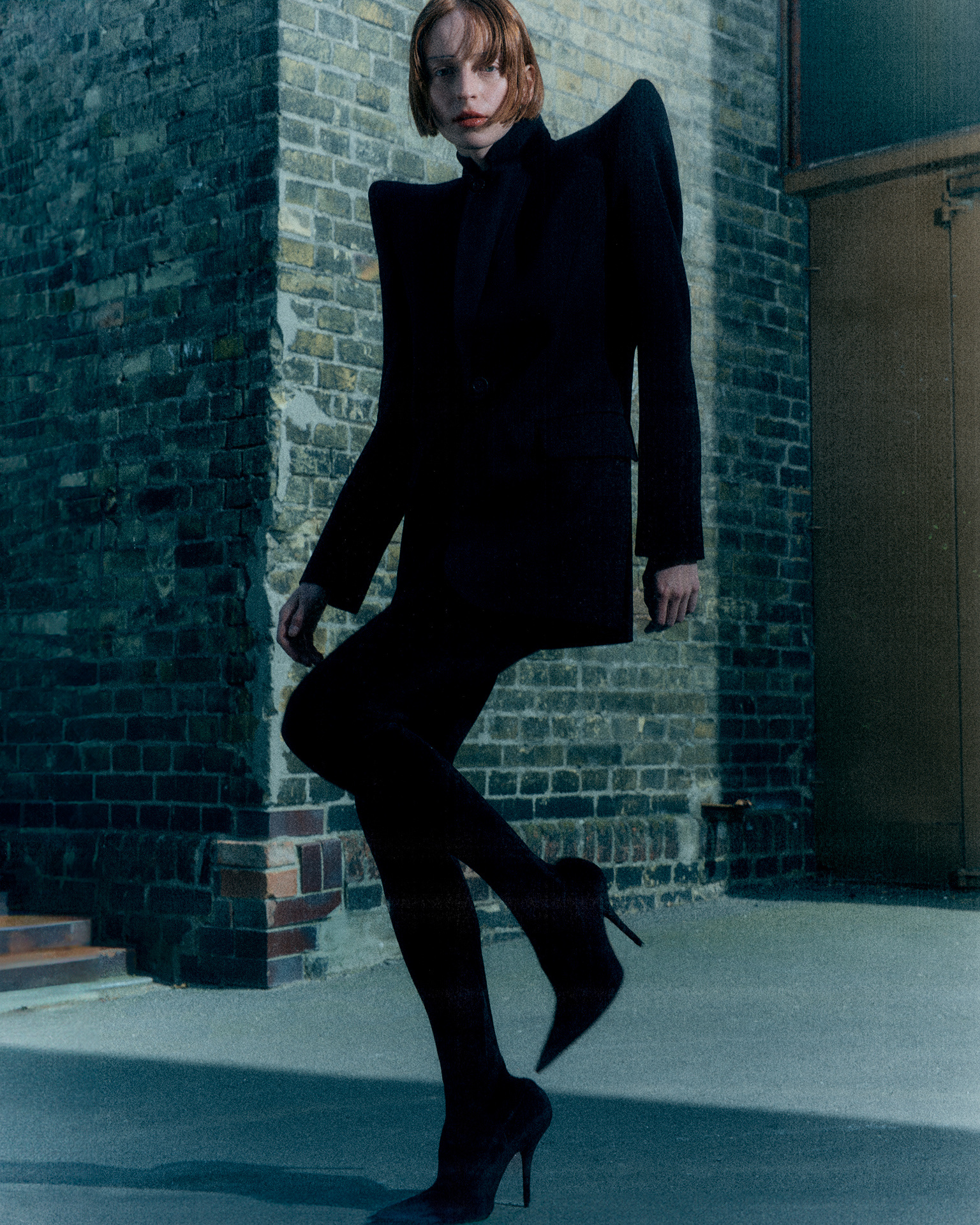
Shot on location. A flash with a bare bulb, no modifier, stands on camera right just above head height and hits the model from the side. The contrast is high and the light feels like sunlight. A small white board brings back detail in the clothes if you need it. A second flash further out in the alley adds depth, placed to suit the location.
The pure paparazzi look, in the studio. One small flash on the camera, or an assistant holding a bare-bulb head right above it. The light comes from where you stand, so the shadows fall straight behind the model and almost disappear. High contrast, brilliant colour.
Hard light is everywhere in fashion photography right now. What matters is where the small source sits: on the camera for the paparazzi look, at the side for drama, high and far away for sun. For the opposite, soft and round light on skin, see our beauty dish breakdown. More studio setups for fashion are in fashion editorial lighting setups, and hard light on skin is in beauty lighting setups.
If the sun is hard already, add hard light. A bare flash matches it, a big softbox would look out of place.
Light from the camera throws the shadow straight back, behind the model. That is the paparazzi look.
No modifier, just the bulb. The smaller the source, the crisper the shadow.
Outdoors, a black board on one side stops stray daylight from flattening the shadows.
Members get all three setups the way we use them on set, with every detail we left out here.
Light from a source that is small compared to the model: the midday sun, a flash with no modifier, or a bare bulb. It makes sharp shadows, strong colour and clear texture. Soft light comes from a big source and wraps around the face.
Put a small flash on the camera, or have an assistant hold a bare-bulb flash right next to it, and point it straight at the model. The shadow falls behind the model, and the picture feels spontaneous, like a paparazzi shot.
Yes. On our L'Officiel shoot the flash lit the model from the front while the midday sun lit the scene from behind. In very bright sun a small on-camera flash can run out of power. A battery flash with a bare bulb, held next to the camera, gives you more.
It can be. Hard light shows skin and fabric as they are, so styling, make-up and the angle of the light matter more. Keep the light close to the camera or high up, and add a white board if the shadows get too deep.
60+ lighting setups from editorials and campaigns
